If you’ve already decided a gate is the right move for your property and you’re now comparing options, you’ve likely landed on electric gate systems as the category worth understanding in more depth. This isn’t an introduction to what a gate is — it’s a look at the practical decisions that come up once you’re seriously considering one for a residential or commercial property.
Swing vs. Sliding: The First Real Decision
Most electric gate systems fall into one of two categories, and the right choice depends heavily on your property’s layout.
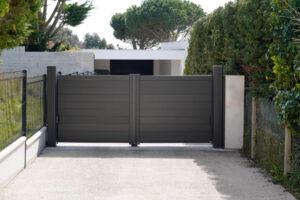 Swing gates open inward or outward on hinges, similar to a door. They tend to suit properties with enough clearance in front of or behind the gate opening, and they can offer a more traditional look that pairs well with certain fencing styles.
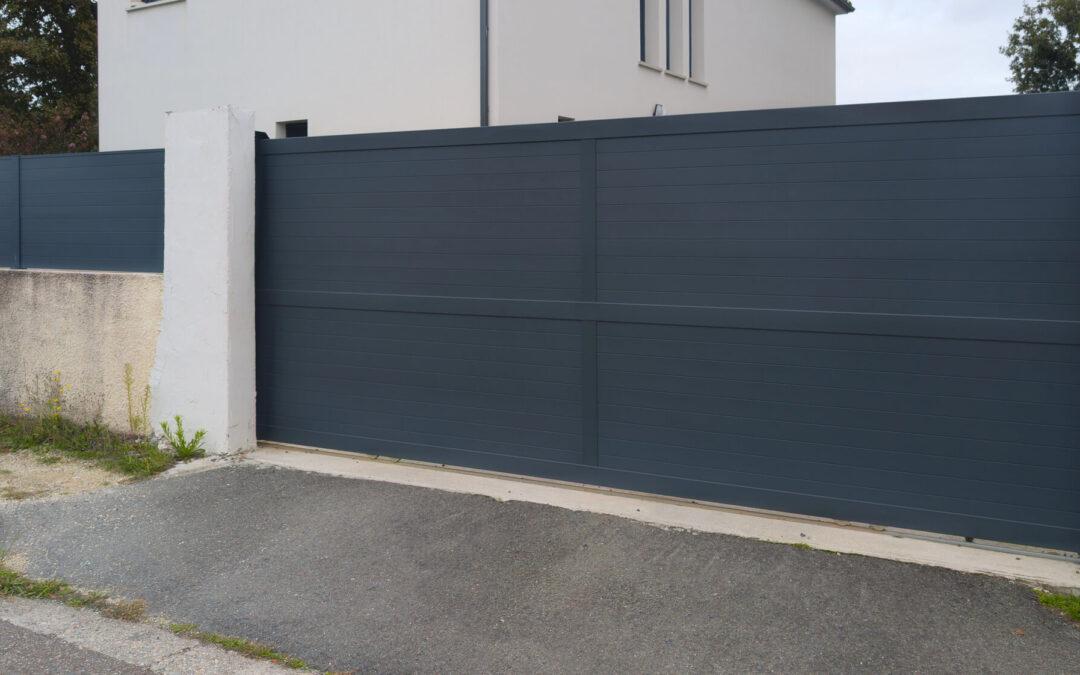
Sliding gates move horizontally along a track, parallel to the fence line. They’re often the better fit for properties with sloped driveways, limited clearance, or where a swinging arc would interfere with parking, landscaping, or the street.
Neither type is universally “better” — it depends on your driveway width, grade, available side clearance, and how the gate needs to interact with existing hardscaping. This is a decision worth making on-site with an installer rather than from a product page alone.
Residential vs. Commercial Applications
Electric gates serve different purposes depending on the setting:
- Residential properties typically prioritize convenience, privacy, and controlled access for family and guests, with lighter-duty use patterns.
- Commercial and industrial properties — retail centers, municipal facilities, aviation and industrial sites, property-management-run communities — often require systems built for higher-frequency use, integration with broader access-control infrastructure, and sometimes coordination with security personnel or monitoring systems.
The operator, materials, and control setup that make sense for a single-family home aren’t necessarily what a commercial property needs, and vice versa. Matching the system to actual usage patterns matters more than matching it to the biggest or most feature-rich option available.
Gate Operators: The Part That Does the Work
The gate operator is the motorized component that actually moves the gate. A few factors affect which type of operator is appropriate for a given installation:
- Gate weight and size — heavier or larger gates require operators rated for that load.
- Frequency of use — a gate that opens dozens of times a day needs a duty cycle suited to that volume.
- Power access — some properties have straightforward access to power at the gate location; others require additional electrical work.
- Backup power needs — depending on how critical uninterrupted access is to your property, a battery backup may be worth discussing.
Getting the operator sized correctly for the gate and the use case is one of the most common points where installations either perform reliably for years or run into recurring issues. This is a detail worth confirming directly with whoever handles your gate operator installation rather than assuming a one-size-fits-all setup.
Access Control Options
 An electric gate is only as convenient — or as secure — as the way people interact with it. Common access methods include:
- Keypads with individual or shared codes
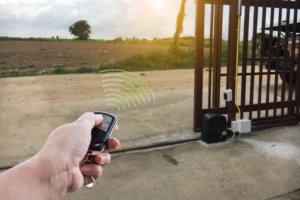
- Remote controls for household members or regular staff
- Intercom or video entry systems for visitor verification
- App-based or phone-linked access for remote control
For properties that need more than basic remote-and-keypad access — multiple user groups, activity logs, or integration with other entry points — pairing the gate with broader access control systems extends that same control to the rest of the property, not just the driveway.
Can an Existing Gate Be Automated?
This comes up often: a property already has a manual gate, and the owner wants to know whether it can simply be motorized rather than replaced. The honest answer is that it depends on the gate itself — its material, weight, current hardware, and structural condition all affect whether automation is a straightforward add-on or whether the gate (or its supporting posts and hardware) needs to be upgraded first. This is worth an on-site evaluation rather than a guess based on age or appearance alone.
Frequency of Use Changes the Calculation
A gate that opens once or twice a day has very different requirements than one used by a large household, a rental property, or a commercial site with constant vehicle and foot traffic. Underestimating usage frequency is one of the more common reasons a system underperforms or requires earlier-than-expected maintenance. Being realistic about how the gate will actually be used — not just how it will be used on day one — leads to a better long-term fit.
Weighing the Decision
Choosing an electric gate system isn’t just about picking swing or sliding — it’s a combination of gate type, operator sizing, access method, and how the property actually gets used day to day. Because those factors interact, it’s worth having a gate systems professional assess your specific property before finalizing a design, rather than starting from a general product category and working backward.
If you’re a Palm Beach County property owner comparing electric gate options for a residential or commercial project, a site visit is the most reliable way to get a recommendation that actually fits your driveway, your usage, and your budget.
Recent Comments